Skin Microbiome Consultant - DRAFT (Team Review)

Alive & Ageless · Microbiome Science
Your Skin Is an Ecosystem
Your Skin Is an Ecosystem
It Deserves to Be Treated as One
ISUN formulations are developed around a single principle: the skin is a living system, and it functions best when its natural biology is supported — never overridden.
1M+
Microbial species inhabit your skin — a living community, not a surface to be cleansed
4
Science-defined criteria against which every ISUN microbiome formulation is evaluated
12
ISUN formulas satisfy all four criteria of the microbiome evaluation framework

Formulating in harmony with the skin's biology — before the category had a name
Section 01
What Is the Skin Microbiome
A Living System. In Perpetual Balance.
The skin is not a surface. It is a living, dynamic ecosystem.
At any given moment, billions of bacteria, fungi, and microorganisms exist on and within it — not as contaminants, but as essential collaborators. They form a protective, self-regulating network woven into the skin’s natural function.
This collective, known as the skin microbiome, works continuously to maintain the integrity of the skin barrier, regulate immune responses, balance pH levels, support the acid mantle, defend against external stressors, and modulate inflammation.
When this ecosystem becomes imbalanced, a state known as dysbiosis, the effects begin to surface. Conditions such as acne, eczema, rosacea, premature aging, and heightened sensitivity are closely linked to disruption of this delicate system. Modern dermatology increasingly recognizes a simple truth, healthy skin is not sterile skin.

“Healthy skin is not sterile skin. The most effective skincare supports microbial balance — it does not eliminate it.”
— Peer-reviewed dermatology consensus, 2025 (Han & Kim, J. Microbiology; Chia et al., Univ. Sunderland)Probiotics
Introduced to Support
Beneficial microorganisms — live or inactivated — that help inhibit pathogenic activity, reduce inflammation, and support barrier recovery.
Most often present in fermented extracts and lysates.
Prebiotics
Nourishing What Is Already There
Naturally occurring nutrients — beta-glucan, inulin, plant-derived sugars — that sustain the microbes already resident on the skin, allowing them to flourish without external introduction.
Postbiotics
Active Without Live Cultures
Bioactive compounds produced through bacterial fermentation — peptides, enzymes, organic acids — offering measurable efficacy and exceptional stability, without dependence on live organisms.
Microbiome-Friendly
Designed Not to Disturb
Formulations that respect the skin’s ecology — free from broad-spectrum antimicrobials, harsh preservatives, and pH extremes. Not stripping. Not sterilising. Creating the conditions in which balance sustains itself.

Section 02
Why the Microbiome Matters
Balance, Visible on the Skin
When the microbiome is balanced, the skin reflects it — calm, resilient, clear, and quietly radiant.
When it is disrupted, the same skin reveals the very conditions most people are trying to address.
Acne is linked to an overgrowth of Cutibacterium acnes, not simply an excess of bacteria, but an imbalance within the microbial ecosystem.
Eczema is associated with reduced microbial diversity.
Rosacea reflects altered microbial interactions.
Premature aging correlates with a gradual decline in microbiome diversity over time.
Conventional skincare often takes an adversarial approach, stripping, sterilizing, and targeting bacteria. A microbiome-conscious approach is inherently different, working with the skin’s biology, supporting balance rather than disrupting it further.
Acne & Breakouts
Imbalance, Made Visible
Dysbiosis allows Cutibacterium acnes to proliferate, triggering inflammation and congestion within the pores.
Restoring balance, rather than targeting bacteria, supports a more sustainable reduction in breakouts.¹
Eczema & Sensitivity
Barrier, Undermined
A decline in microbial diversity weakens the barrier — moisture escapes, irritants penetrate, and the skin loses its capacity to defend itself.
Microbiome-supportive formulations help restore both barrier integrity and ecosystem balance.²
Rosacea & Redness
Inflammation, Unchecked
Disrupted microbial communication drives persistent inflammation — the underlying condition rosacea reflects.
Calming botanicals, combined with supportive barrier lipids, help address the underlying imbalance.²
Premature Aging
Diversity, Diminishing
With time, microbial diversity gradually and naturally diminishes.
This decline is associated with reduced barrier function, persistent inflammation, and accelerated collagen loss.³
Barrier Damage
Foundation, Fragile
A compromised barrier is among the most significant drivers of microbiome disruption — at any age, in any skin type.
Restoration, through appropriate lipid support, is fundamental to maintaining skin equilibrium.⁴
Uneven Skin Tone
Inflammation, Quiet but Persistent
Microbial imbalance drives chronic low-grade inflammation, which accelerates pigmentation and disrupts the even cell turnover needed for a luminous complexion.²
Section 03
What the Microbiome Needs
Ingredients That Work With the Skin
Science identifies three complementary categories of ingredients that, together, support a complete and stable skin ecosystem. No single approach is sufficient — balance requires all three in concert. ISUN formulations are built on this understanding: cold-processed, plant-oil centred, and developed to create the conditions in which the microbiome can sustain itself.
C1 · Barrier-Supporting Oils
The Habitat of the Microbiome
Plant oils rich in linoleic acid help restore the epidermal lipid matrix, the physical environment in which beneficial microbes exist. Without a stable barrier, microbiome balance cannot be sustained. Target range, 40–60% of the formula.⁵
C2 · Anti-Inflammatory Botanicals
Calm as a Prerequisite for Balance
Inflammation directly disrupts microbial equilibrium. Select botanicals help reduce inflammatory signalling, modulate pathogenic activity, and support conditions in which commensal microbes can thrive, without sterilising the ecosystem. Target range, 5–15%.⁶
C3 · Fermented & Postbiotic Ingredients
Bioactive, Stable, and Purposeful
Fermentation-derived ingredients deliver bioactive metabolites, including peptides, enzymes, and organic acids. These offer a stable, clinically supported approach to microbiome care, without reliance on live organisms. Target range, 2–10%.⁷
Each Ingredient, Defined
Selected with Purpose. Documented with Precision.
Every ingredient listed here is present within an ISUN microbiome-aligned formulation. Its mechanism, source, and supporting research are documented below.
Jojoba Oil
Simmondsia Chinensis Seed Oil
Its wax esters closely mirror human sebum — creating a compatible environment for commensal microbes while supporting the acid mantle. Non-comedogenic. Barrier-neutral. Profoundly compatible with the skin’s own biology.
Vollmer et al. (2018), IJMS
Sunflower Seed Oil
Helianthus Annuus Seed Oil
Rich in linoleic acid, it supports the restoration of stratum corneum lipids — with studies indicating a measurable shift toward greater microbial diversity and balance that follows.
Chen et al. (2025), Journal of Oleo Science
Sea Buckthorn Oil
Hippophae Rhamnoides Oil
Palmitoleic acid — naturally present in human sebum — creates the conditions in which commensal bacteria flourish. Deeply compatible with the skin’s own lipid architecture.
Siqueira et al. (2025), ACS Omega
Rosehip Oil
Rosa Canina / Rubiginosa Seed Oil
Linoleic acid and natural vitamin A precursors converge in this oil to support barrier restoration — with particular relevance to compromised, post-inflammatory, or sensitised skin.
Vollmer et al. (2018), IJMS
Centella Asiatica
Centella Asiatica Extract
Asiaticoside and madecassoside work in tandem — supporting barrier repair, quieting inflammation, and remaining fully compatible with the commensal microbes the skin relies upon.
Mourelle et al. (2023), Applied Sciences
Green Tea Extract (EGCG)
Camellia Sinensis Leaf Extract
EGCG selectively modulates Cutibacterium acnes while preserving commensal bacteria. Provides antioxidant protection against inflammation induced by environmental stress.
Melnyk et al. (2022), IJMS
Licorice Root (Glabridin)
Glycyrrhiza Glabra Root Extract
Glabridin inhibits tyrosinase activity to support an even tone, reduces visible redness, and selectively addresses microbial imbalance — while preserving the beneficial flora that healthy skin depends upon.
Melnyk et al. (2022), IJMS
Calendula & Helichrysum
Calendula Officinalis · Helichrysum Italicum
Together, these two botanicals demonstrate complementary anti-inflammatory and restorative activity — supporting barrier repair and sustaining microbial diversity without contributing to its disruption.
Theodorou et al. (2024), Nutrients
Saccharomyces Lysate Extract
Saccharomyces Cerevisiae Extract
A fermentation-derived ingredient delivering a precise spectrum of microbial metabolites — peptides, enzymes, and structural proteins — with the stability and efficacy of postbiotic science. It supports barrier function and helps regulate the skin's immune signalling without requiring live cultures.
De Almeida et al. (2023), Microorganisms
Symglucan (Beta-Glucan)
Beta-1,3/1,6-Glucan
Symglucan nourishes the beneficial microbes already resident on the skin, supporting their proliferation without introducing external organisms. It also enhances hydration and reinforces barrier resilience — a dual function that distinguishes it within the ISUN system.
Zeng et al. (2025), Antioxidants
Hyaluronic Acid & Glycerin
Sodium Hyaluronate · Glycerin
These humectants sustain the hydration environment in which microbiome stability is possible — supporting barrier integrity while drawing and retaining moisture within the living tissue.
Khan et al. (2025), HSJ; Zeng et al. (2025)
Aloe Vera
Aloe Barbadensis Leaf Juice
Its polysaccharide content delivers meaningful hydration while gently sustaining microbial diversity. Aloe vera demonstrates mild prebiotic activity alongside the calming and restorative properties that have made it one of the most studied botanicals in skin science.
Wojciechowska & Dos Santos Szewczyk (2025), Molecules
Science References
- Han & Kim (2024). J. Microbiology — Skin microbiome and acne dysbiosis.
- Hong et al. (2025). Annals of Dermatology — Microbiome links to eczema, rosacea and inflammatory conditions.
- Townsend & Kalan (2023). Biochem. Soc. Trans. — Age-related microbiome diversity decline and skin aging.
- Smythe & Wilkinson (2023). IJMS — Barrier repair as the primary microbiome stabiliser.
- Siqueira et al. (2025). ACS Omega; Vollmer et al. (2018) IJMS — Barrier oils and microbiome habitat.
- Melnyk et al. (2022). IJMS; Mourelle et al. (2023) Appl. Sci. — Anti-inflammatory botanicals and microbiome stability.
- De Almeida et al. (2023). Microorganisms — Postbiotics in cosmetic formulations.
Section 04
The ISUN Microbiome Framework
Four Criteria. One Living Standard.
Every ISUN formulation is assessed against four interconnected criteria — because skin harmony is never the consequence of one ingredient in isolation, but of a complete formula that functions in respect of the skin’s living biology.
01 · Preserves Microbiome Diversity
Diversity Is Health
ISUN formulations are designed to preserve what is already present. Broad-spectrum antimicrobials and disruptive preservatives are excluded by principle. What remains is a formula that actively supports the richness, balance, and resilience of the skin’s microbial community.
02 · Fatty Acid Profile, Linoleic & Palmitoleic Acid
Supporting the Biology That Supports the Skin
Linoleic acid restores barrier integrity and provides the preferred lipid substrate for commensal microorganisms. Palmitoleic acid offers selective, gentle antimicrobial activity while remaining compatible with balanced flora. Every ISUN formulation is evaluated for its fatty acid composition — ensuring it nourishes the biology the skin depends upon.
03 · Selective Pathogen Inhibition
Precision, Not Elimination
We prioritize ingredients that help selectively modulate the overgrowth of C. acnes and other opportunistic organisms, while preserving the commensal species that protect and stabilize the skin. This level of precision is foundational to microbiome-conscious formulation.
04 · Barrier Reinforcement, Ceramide Compatibility
The Structure That Makes Balance Possible
Each formulation is evaluated for compatibility with the skin’s ceramide architecture — ensuring it supports the lipid matrix that sustains hydration, resists external stressors, and creates the precise biological environment in which microbial balance can hold.
Section 05
ISUN Microbiome-Aligned Formulations
Selected by Science. Applied with Intention.
Each formulation in the ISUN range is assessed against four criteria rooted in peer-reviewed cosmetic science. Only those that demonstrably support barrier-restoring oils, anti-inflammatory botanicals, fermented or postbiotic actives, and prebiotic or humectant systems are considered microbiome-aligned. These are those formulations.
Tier 1 · Strongest
Foundational Microbiome Formulations
These formulations satisfy three to four of the defined criteria — they are the heart of ISUN’s microbiome approach and the natural starting point for any microbiome-conscious routine.
Best Overall
Facial Cream · ISUN_047
Phyto-Antioxidant
The most complete microbiome formulation within the ISUN range. A carefully balanced composition of barrier-supporting cold-pressed oils, anti-inflammatory botanicals, Symglucan prebiotic, sodium hyaluronate, and antioxidant vitamins — developed to nourish the skin's ecosystem at every level.
✓✓ Barrier Oils
✓✓ Botanicals
✓ Postbiotic
✓✓ Prebiotic
Ideal for: maturing skin, barrier support, daily restoration
Shop Now →
Postbiotic · Gen 2
Facial Serum · ISUN_031
Phyto-Infusion Serum
A postbiotic serum of the second generation — Saccharomyces lysate combined with Symglucan prebiotic, supported by niacinamide, vitamin C, and centella asiatica. Formulated for visible clarity, sustained balance, and progressive microbiome restoration.
✓ Barrier Oils
✓✓ Botanicals
✓✓ Postbiotic
✓✓ Prebiotic
Ideal for: imbalance, redness, microbiome restoration
Shop Now →
Postbiotic Eye

Eye Cream · ISUN_055
Phyto Eye Cream
A postbiotic formulation developed for the periorbital zone — among the most delicate skin on the face. Barrier-supportive lipids and a full botanical complex address sensitivity, fine lines, and compromised resilience in concert.
✓✓ Barrier Oils
✓✓ Botanicals
✓✓ Postbiotic
✓ Prebiotic
Ideal for: fine lines, sensitivity, barrier repair
Shop Now →
Top Oil Score

Facial Oil · ISUN_041
Ultra Ruby Facial Oil
A rich convergence of cold-pressed lipid sources and concentrated botanical actives. Ultra Ruby delivers measurable barrier support and deep nourishment to skin that is depleted, dry, or in recovery.
✓✓ Barrier Oils
✓✓ Botanicals
Ideal for: dry skin, nourishment, barrier support
Shop Now →
Sensitive Skin

Facial Oil · ISUN_042
Ultra Sapphire Facial Oil
Composed for skin that reacts — to products, environment, stress, and disruption. Ultra Sapphire's calming botanical profile and lipid composition support balance without the risk of overstimulation.
✓✓ Barrier Oils
✓✓ Botanicals
Ideal for: sensitivity, reactivity, compromised barriers
Shop Now →
Tier 2 · Strong
Complementary Microbiome Formulations
These formulations carry strong barrier-oil and botanical profiles — effective partners within a complete microbiome routine, or as targeted additions to an existing regimen.

Facial Oil · ISUN_040
Ultra Sunstone Facial Oil
Developed for oily and combination skin, Ultra Sunstone works to regulate sebum activity while preserving the microbial stability that balanced skin requires. It does not strip — it recalibrates.
✓✓ Barrier Oils
✓✓ Botanicals
Ideal for: oily and combination skin
Shop Now →
Facial Oil · ISUN_045
Sapphire Facial Oil
A composed, daily-use oil for skin that is generally balanced but benefits from consistent lipid and botanical support. It sustains barrier function quietly, without excess.
✓✓ Barrier Oils
✓✓ Botanicals
Ideal for: sensitive and combination skin
Shop Now →
Facial Oil · ISUN_044
Ruby Facial Oil
Linoleic acid forms the core of Ruby — a formulation designed to restore the skin's lipid equilibrium and create the conditions in which microbial balance can be maintained.
✓✓ Barrier Oils
✓✓ Botanicals
Ideal for: dry skin, barrier repair
Shop Now →
Body Oil · ISUN_110
Skin Restore Body Oil
The body's skin carries its own microbiome. Skin Restore Body Oil extends the same lipid-restoration and botanical-support principles across larger surface areas — wherever barrier repair and microbiome maintenance are needed.
✓✓ Barrier Oils
✓✓ Botanicals
Ideal for: body care, barrier restoration
Shop Now →
Face & Body Balm · ISUN_049
Soothing Relief Balm
A concentrated formulation for skin that is compromised, inflamed, or reactive. Prebiotic actives and calming botanicals address sensitivity at its biological origin — within the microbial environment itself.
✓✓ Botanicals
✓✓ Prebiotic
Ideal for: sensitivity, redness, recovery
Shop Now →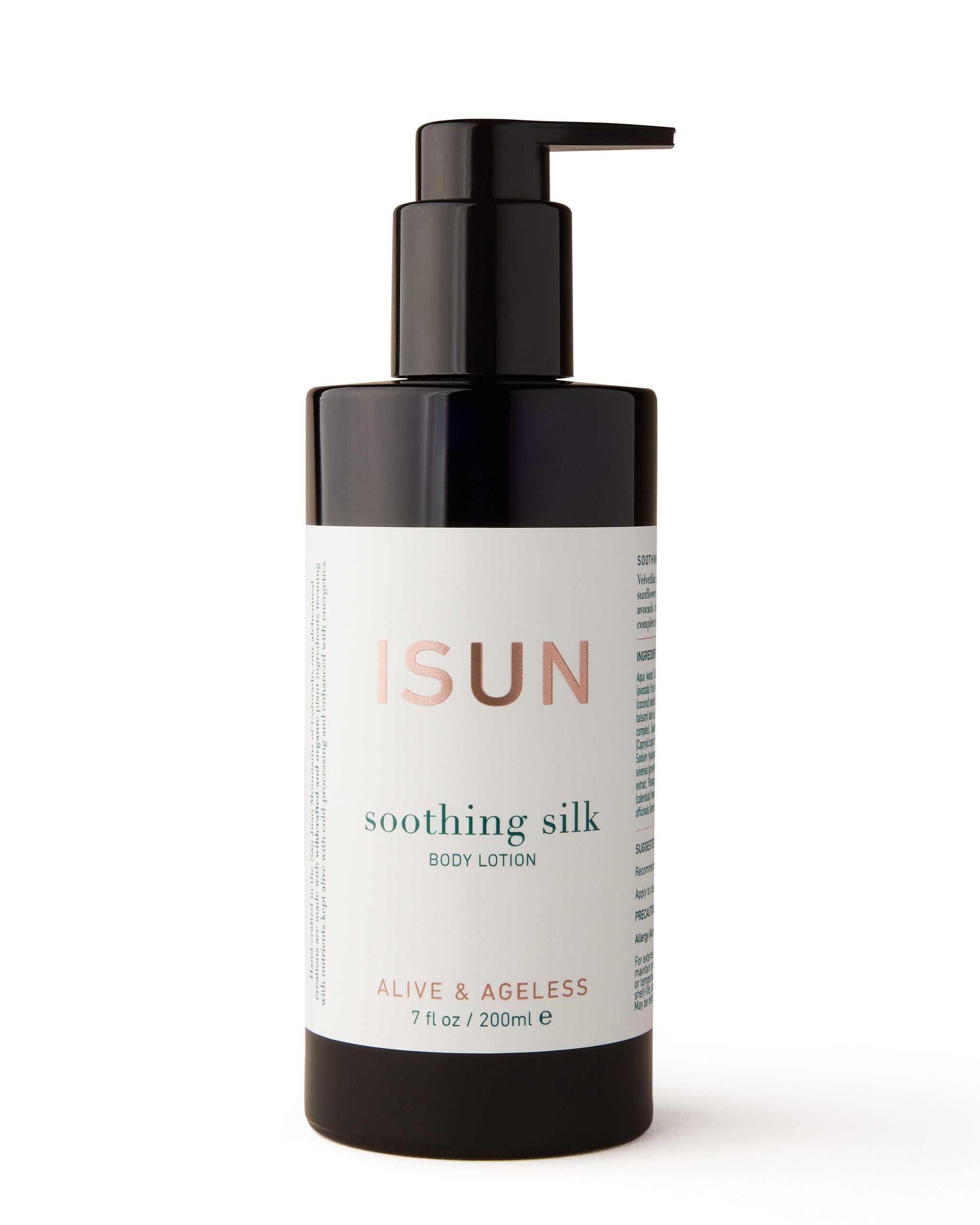
Body Lotion · ISUN_135
Soothing Silk Lotion
A daily body formulation that sustains the moisture environment essential for microbiome stability — supporting beneficial flora across the body's largest organ, without disruption.
✓✓ Barrier Oils
✓✓ Botanicals
✓ Prebiotic
Ideal for: daily hydration, microbiome maintenance
Shop Now →Consistent. Considered. Fully aligned with the intelligence of living skin.
Section 05 · Personalised for You
Your Skin Microbiome Consultation
Six questions. A routine shaped entirely around you — your skin type, your concerns, your biology.
Question 1 of 6
01 / 06 · Skin Type
How does your skin behave, without intervention?
Consider how your skin presents mid-afternoon, having not been touched since morning — its natural, uninfluenced state.
02 / 06 · Primary Concern
What concerns you most about your skin at this moment?
You may select more than one.
Begin with what troubles you most consistently.
03 / 06 · Duration
How long has this been present?
Longstanding concerns tend to reflect a more entrenched microbiome imbalance than occasional, situational flare-ups.
04 / 06 · Lifestyle
How would you describe your stress and sleep?
Chronic stress and poor sleep are among the most well-documented environmental drivers of microbiome disruption — their influence on skin biology is direct and measurable.
05 / 06 · Sun Protection
Is SPF part of your daily practice?
UV exposure generates oxidative stress that measurably disrupts the microbiome — making daily sun protection a foundational element of any microbiome-conscious routine.
06 / 06 · Your Routine
How would you describe what you currently apply to your skin?
This allows us to consider whether your current products may themselves be contributing to the imbalance you've described.
Your Microbiome Routine
Based on your responses, these are the ISUN formulations the science identifies as most aligned with your skin's biology.
Your Skin Profile
Primary Formulations
Supporting Formulations


